
Bed Rail
Bed Rail
"Makes bath time so much easier and I can actually wash my little one properly without struggling."
📏 Height-adjustable pole grows with your baby
🤲 Curved, rounded handle wraps aroundfor little hands to hold
🛁 Both your hands free for quick, easy washing
Couldn't load pickup availability

Bed Rail
Get it between - and -.
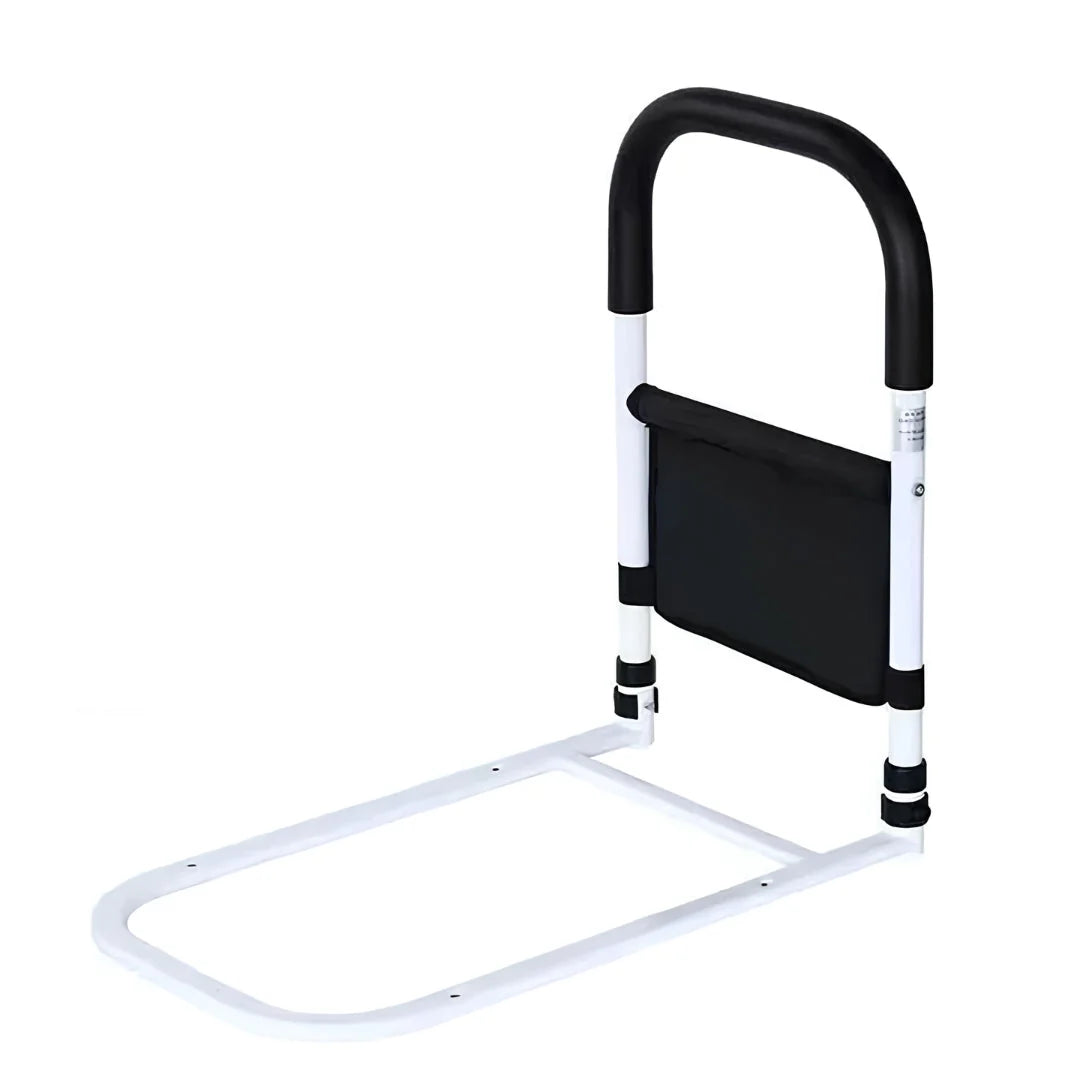
Getting out of bed is three hard movements, done half-asleep, often in the dark.
When you're young it's one motion. With age it becomes a push, a stand and a first step, and each one asks for strength, steady blood pressure and balance right after you've been lying still for hours.
-
Sitting up
Rolling to the edge and pushing upright takes arm and core strength. A soft mattress edge sinks under your hand, and there's nothing solid to push against.
-
Standing up
Blood pressure dips when you stand. About 1 in 5 adults over 60 have a drop big enough to matter, and it's most common in the first minute or two after standing. That's the moment you feel light-headed.
-
The first steps
Often in the dark, still half-asleep, and in a hurry to reach the bathroom. Two or more bathroom trips a night are linked to more than double the risk of fall-related fractures.
Falls are the most common way older adults get hurt at home
- 1 in 4
- adults aged 65 and over report a fall every year CDC
- 37%
- of those who fall are hurt badly enough to need treatment or rest for at least a day CDC
- 3.85M
- emergency room visits for falls by adults 65+ in 2023 National Safety Council
Most bedrooms have nothing built to take your weight at that moment. People push on the nightstand, the soft edge of the mattress or the wall, and none of them were made for it.
Sources: CDC, Older Adult Falls fact sheet; National Safety Council Injury Facts (older adult falls); StatPearls, Orthostatic Hypotension (NCBI Bookshelf); Juraschek et al., Journal of the American Geriatrics Society, 2023; UroToday, Nocturia review.
General information only, not medical advice. If you've had a fall or feel dizzy when you stand up, speak to your doctor.